Friday, August 1, 2008

Moving up dates for job offers

Though librarians are not specifically mentioned in this article, there are some librarians who will be interviewing for tenure track positions and this may be a trend that will affect the whole: moving up the dates for offers (as early as the end of January).

Other trends that will affect interviews:
  • More telephone and VOIP interviews to deal with the rising cost of paying to fly in candidates.
  • Need a teaching demonstration? You may be asked to create one and submit it to YouTube. Another way to keep travel costs down.
  • More interviews at conferences, to do double-duty of networking and recruiting, or a decrease in conference attendance, since money may have to be allocated for increased travel costs. In the latter case, expect more online conferences and less in-person conferences.
Can you think of something else that will, or already has, affected interviews and job offers?

Thursday, July 31, 2008

They time you when you go to the bathroom?

According to this article from WSJ Online, the employee monitoring system has gone hi-tech, allowing companies to monitor the computer activity of their freelancers and telecommuters as the workers work in their home offices. If you want to use the services to score a gig, you may have to play by their monitoring rules--but I really want to know that the program isn't watching my activity when I am not "at work".

And what was cricketfan thinking?

Wednesday, July 30, 2008

Job-hunting Online

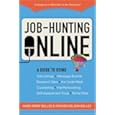
Job-Hunting Online is a member to the best-selling What Color is your Parachute? series--the principal book in this series is released in a new version each year--which is probably one of the most well-known career guidance series. The author, Richard Bolles, has managed to create a career management empire with materials for job seekers, including special audiences such as teenagers and the "disabled", and for career counsellors. This volume focuses on the Internet and its resources for job seekers.

This book is a general job guide, meaning it is suitable for everyone who wants to use the Internet to find work, but that doesn't mean that librarians can't get something out of it. First, the two Bolles are skeptical about the overall effectiveness of a one method, Internet-or-bust, job search strategy and they assess how effective each type of resource is for finding work. Sites that have a cost to use are identified with a dollar sign, but the majority of resources are free. There is good coverage for using major job sites to find work, finding career advice, like getting in touch with a counselor, and using the Internet for networking. Most librarians are going to be fairly technically savvy--they flog us with mouse cords in library school--but if you had to find an Internet guide for an irregular Internet user, this would be the one that I would give them to get started. I also like this one better than the Guide to Online Job Searching--though I haven't looked at this year's edition yet--since the Bolles' book is tied to an actual job seeking strategy that looks at how effective a site is, not just the resources available on the site.

The authors also tie the book's resources to the job seeking strategies outlined in What Color is Your Parachute?--and if you think the Internet is the best place to find a job, march straight over to your library and pick up a copy of Parachute (you need it).

Many of the links, with slightly different categorization, are available on Bolles' portal JobHuntersBible.

Tuesday, July 29, 2008

Courses that may help you find a library job

There are some courses that you may have taken, as part of your undergrad or just for personal interest, that you may not have thought to mention when you were applying or interviewing for a library job.
  • Have you taken a budgeting or personal finance class? I'm not thinking about applying your skills to the library budget, but there may be an increase in programming in libraries toward helping people deal with tightening household budgets. You would have at least the basic vocabulary and, possibly, contacts, to assist with collection development or programming in those areas. Take a look at this article from the Consumerist and see how many ways library programming and services can help people during an economic downturn. (Yes, we do it all the time, but people notice it more during tough times.)
  • Did you volunteer to help people fill out their taxes? Again, similar to the finance class, you may know of resources and books that could help patrons. Make sure that you are not giving advice, but that you know where to find the best advice.
  • Done any photography or videography? Many libraries are increasing their use of YouTube (or other educational video sites) and Flickr to create innovative book talks or instructional materials for their staff and patrons. 
  • Know your way around an application form? People need to get student loans, they need to take tests to get accepted into certain professions and occupations, they need to write application letters, personal statements and conduct informational interviews--kinda sounds like an application to library school. More than that, what books did you use, who did you talk to, and use your experience to help others.
  • You can search the Internet. Like a fiend. Can you find job postings? Use a vertical search engine? Find out about small business loans? Find free e-books and resources on a particular topic? It's still magic to a lot of people.
Think of some of the "survival" skills that you have that would assist others, and I am sure you can come up with some innovative ways to help a new library employer.

Monday, July 28, 2008

Libraries, live--from India?

This article from FUMSI reiterates some of the usual advice--stay visible, save money, talk to people--but one of the things that made my heart stutter: outsourcing library or information jobs to India. It's part of the overall trend: programmer jobs, journalism and reporting, call centres, payroll and healthcare services. Why not librarians, especially in the parts of the field that are (F2F) low touch:
  • collection development
  • cataloging
  • ask-a-question IM services
  • website design and maintenance
You wouldn't think that they could pay librarians less for the work they do but some companies may have found a way.

Friday, July 25, 2008

I don't have any friends like that


Think about who's in your network.

Thursday, July 24, 2008

Look into my eyes

Jobacle had a great short post on eye contact and I thought I would expand on it slightly since eye contact can have ramifications for interviews, as well as on-the-job customer service delivery.

The Jobacle post has some nice basic rules, but there are some cultural rules to be aware of: not all cultures evaluate the quality of eye contact in the same way as North Americans. There are differences between the countries that make up North America, as well as urban/rural, or native Americans or Canadians, and male to female. I have also met some North Americans (more below) who are pretty harsh when evaluating the quality of eye contact, so if you are interviewing for a North American position, but you aren't from around these parts, you might want to get some tips.
If you have concerns about your eye contact and the appropriateness of your gaze, you might want to have a mock interview that is video taped and see how good your eye contact is. Talking with a person from the country where you plan to interview--and, yes, there are differences between the US and Canada (we're not just cooler)--is a good idea.

As an aside, I teach ESL as a volunteer, and I have heard some disturbing stories from my students about getting hassled by law enforcement (train security and city cops) because of their lack of eye contact. Some of the officers have told these students that they look shifty and deceitful. The cops were quite belligerent with the students, when really the student's culture has told him/her to look on people in uniform with respect--not to mention that some countries have notoriously bent cops and it's a good idea to not attract their attention. I'm surprised that this was an issue, but I had a really upset student talk to me about a situation last year that made me think that people in authority--and this includes librarians and HR professionals--should stop acting like hyperactive rottweilers.

Search all of Craigslist

Though you aren't supposed to be able to, Wired How-To Wiki has come up with a method, using Google's advanced search, to search all of Craigslist at once. You could use this method to find items for sale...or you could use it to look for freelance contracts or job postings, if place is no object in your job search. Very useful if you are looking for sideline work like editing, tutoring or small writing contracts.

This search could also work for nonprofit jobs that are posted on Craigslist, or if you are looking for library jobs that are posted on Craigslist. (I'm not aware of any libraries that use Craigslist to post job ads, but what the heck, cover all of your bases).

Wednesday, July 23, 2008

New widgets

I've added some widgets on the right hand side of this blog.
  • The first is the badge for the Yahoo! Pipes that I built to find Canadian library jobs. It's not perfect, but it might display a post that you have overlooked.
  • Below that is the Career Jet widget. Career Jet is a vertical search engine with multi-lingual and multi-national versions. A colleague of mine also played with it and you can do something completely cool: you can look for jobs in your native language (we tried Chinese) while searching results from another country (we searched for jobs in Canada). An awesome way to improve your search if you want to use your first language while looking for jobs in another country.
So remember to look right when you visit this blog.

Tuesday, July 22, 2008

Discount Bus Lines for Interviews

The NPR Business Story of the Day, Discounts Help Bus Travel Thrive In Some Cities, talks about some of the cheap discount buses that people are making use of when Amtrak or a plane is just beyond the traveller's budget. If you have to pay your own way to get to an interview, and the city you need to travel to is served, this may be one way to keep your costs down.

Companies mentioned in this story:

Monday, July 21, 2008

What do you value most in a team mate?

When we think of a team, we think of different players on the field, all with different strengths or roles to play in the service of the team. If you have ever played on a team, there are also some team members who urge us to play harder, to try again--and not to spit in our hands when we go to shake the hands of the opposing team members at the end of the game.

Think about how your co-workers or project partners have made you better: did they realize what your strengths were and try to give you projects that accommodated those strengths? Did they try to push you to try something new or help you over an obstacle? Did they give you something personal--like suggest you be kinder, more forgiving, or efficient. Think about it.

Do you have a person in mind who may have improved one of your hard skills and one softer skill? You can treat this question as a BDI question and give an example of your best team mates and what you learned from them. Try not to use names.

Now, one of the ways people falter with this question is that they confess how their team mates keep their bad habits in check. You stay stuff like, he always made sure my work was handed in on time and helped me with my punctuality problem. Uh-oh, you look like a wayward calf that he had to rope--so you're the weak link. You're someone the excellent team mate, who didn't apply, had to coddle.

Candidates also drop the ball on this question when they need something that the organization can't--or is unwilling--to provide. For example, if you talk about how your team mates mentored you as the newest librarian on staff and the interviewer does not think that mentorship is necessary, strike one. This is why a long list of team qualities is bad: you could unknowingly hit some of their pressure points.

Try not to confess to personal weaknesses as part of the team--especially if you're sometimes a poor sportsman. Don't give a litany of great qualities and no examples. Limit your response to one or two examples, explain and shut up.

Friday, July 18, 2008

What is one professional goal you want to accomplish this year?


This question wants to know if you have a plan--and if that plan matches with their job. Suggesting that you want to do research in teaching methods and effective instruction when the position you are interviewing for is collection development and licence negotiation means that you haven't read the job posting. Or that there will be a constant push-pull between the duties of the position and your real desire.

I'm not going to say something like, why are you interviewing for a job that is not part of your professional plans? It's a good question, but if you're an entry-level candidate, you may not know what you would like to do as a librarian--and, well, you need to eat. So, obviously, look at the job posting and see where it is going professionally and hopefully you want to walk a little way with it.

If you were applying to this position currently available at the University of Manitoba libraries, what could be one professional goal that you could latch on to? Well, taking an additional course in cataloging may not be a bad idea. You can also discuss, generally, a conference that you would like to attend that has relevant information. If your capping exercise is related to the position, discuss how you would like to turn it into an e-book and make it available to other librarians, or how you would like to develop it into a course. But look for something that is professionally related to the position that looks like it would be worth their time and investment.